
Temptations of Power
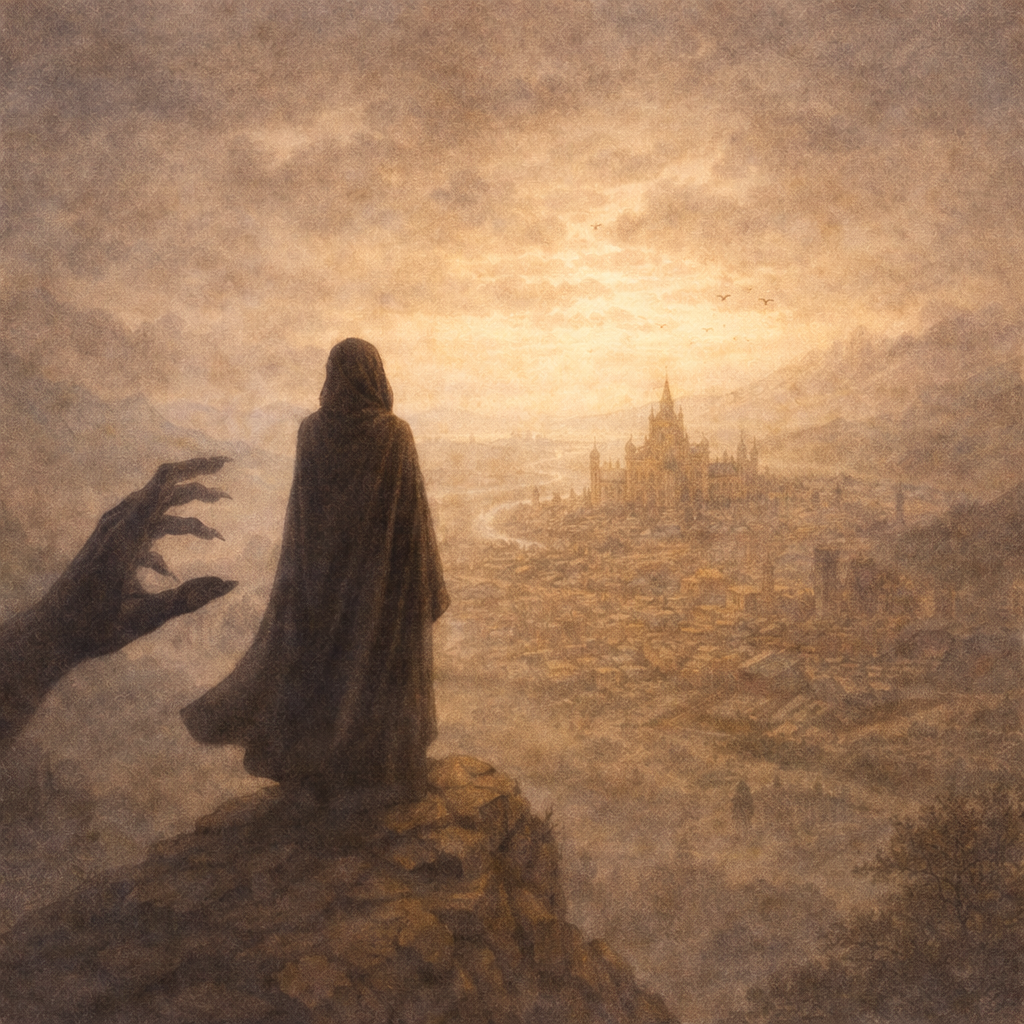
Presence, Authority, and the Way of Christ
Every movement of spiritual renewal eventually faces the same quiet but decisive question:
Will this remain a movement of presence - or will it yield to the temptation of power?
This is not a modern question.
It is as old as religion itself.
Again and again, sincere movements of faith begin with hunger for God, dissatisfaction with hollow religion, and a longing for real transformation. They are marked by prayer, repentance, humility, and a renewed sense of divine nearness. Something genuine is touched.
But somewhere along the way, another question begins to surface - often unnoticed:
If this is real, how do we protect it?
If this matters, who should lead it?
If God is truly at work here, should this not shape the wider world?
It is at this point that presence is quietly tested by power.
Presence and the early fire
Authentic renewal always begins with presence.
People are drawn not by authority, but by aliveness.
Not by certainty, but by encounter.
Not by systems, but by sincerity.
At this stage, faith feels fragile and luminous. There is little interest in influence or control. The emphasis is inward: surrender, prayer, transformation of the heart. Authority is informal and relational. Leaders are recognisable more by depth than by position.
Historically, many renewal movements - including early Pentecostal streams - began exactly here.
But presence, left unexamined, can slowly become identity.
When experience becomes identity
Over time, experience can harden into a sense of specialness.
Language begins to shift:
from God is among us
to God is doing something unique here
This is subtle. Often well-intentioned.
But once experience becomes identity, identity seeks protection.
And protection requires structure.
When structure seeks authority
As movements grow, questions of leadership and legitimacy arise. Who decides? Who interprets what God is saying? Who carries authority?
At this stage, titles reappear. Hierarchies form. Spiritual language is used to legitimize decisions. Obedience becomes a virtue. Dissent begins to sound like rebellion.
Authority is no longer primarily relational or contemplative.
It becomes positional.
What began as a movement of presence now risks becoming a movement of power.
From authority to influence - and beyond
Once authority is established, influence naturally follows.
The language expands outward:
culture
society
nation
destiny
Spiritual metaphors shift from formation to conquest. Faith becomes something to be applied to the world rather than something that transforms the heart. Power begins to feel justified - even necessary - for the sake of righteousness.
This is where some movements slide toward dominion thinking, where control is reframed as obedience, and authority is sacralised.
The shift is rarely announced.
It happens gradually, under spiritual language.
The deeper issue: how the Fall is understood
At the heart of this temptation lies a theological assumption.
If the Fall is understood primarily as a crime, then salvation must be a verdict. Authority must enforce order. Power must restrain evil.
But the Christian mystical tradition has long read the Fall differently.
Not as humanity falling out of God’s favour -
but as humanity falling into fear.
Genesis reads less like a courtroom drama and more like a human trauma story:
fear replacing trust
shame replacing innocence
hiding, blaming, and covering beginning
This is not a crime story.
It is a trauma story.
And if the Fall is trauma, then salvation is not a verdict - it is healing.
Healing does not require domination.
It requires presence.
The mystics and the refusal of power
This is why the Christian mystics, across centuries, consistently refused power.
When Christianity aligned itself with empire, the Desert Fathers walked away.
When faith became nationalised, mystics chose obscurity.
When authority hardened, contemplatives deepened inward.
They understood something essential:
Power inflates the false self.
Presence dismantles it.
Authority grounded in transformation produces humility.
Authority grounded in position produces control.
Mysticism acts as a quiet immune system within the Christian tradition, resisting the fusion of faith and domination - not by protest, but by refusal.
Jesus and the temptation of power
This is not an abstract concern.
The temptation of power stands at the very centre of the gospel story. Jesus is repeatedly offered authority without surrender, influence without the cross, kingdoms without love.
Each time, he refuses.
The Way of Christ does not bypass weakness.
It passes through it.
Jesus does not save the world by seizing control.
He reveals God by remaining present - even unto death.
Any movement that claims Christ while abandoning that posture has lost its centre, no matter how successful it appears.
Why this matters now
In our time, spiritual language is again being used to legitimise power - political, cultural, and religious. Faith is being asked to sanctify control.
This reflection is not an accusation.
It is a discernment.
The question is not who is right, but what kind of spirit is at work.
Presence or power.
Communion or control.
Healing or dominance.
A quiet conclusion
Sanctuaries are not built to compete with movements of power.
They exist to remind us of another way.
A way where:
fruit is trusted rather than measured
authority emerges from depth, not position
love does not need to win to be true
God does not need control to be effective
The temptation of power is perennial.
So is the invitation to return.
Presence remains enough -
if we are willing to let it be.
Bruce & Sue Reflect
Bruce:
“Look, I reckon most of us don’t wake up one morning wanting power.
We just get tired of feeling helpless. So we tighten things up. Get organised.
Start telling people what’s right. Next thing you know, we’re calling it leadership.
But if I’m honest, the moments that actually changed me weren’t when someone took charge - they were when someone stayed present and didn’t bail.
Power can get things done.
But presence is what actually changes people.”
Sue:
“What I notice is how easy it is to confuse certainty with safety. Power promises safety - clear lines, strong leaders, firm answers.
Presence feels riskier. It asks us to stay open, vulnerable, and unsure.
But love has always worked that way.
When faith becomes about control, people get smaller. When faith stays rooted in presence, people soften.
I think the invitation is very simple really: to keep choosing relationship over righteousness, and trust that God is gentle enough to work without force.”
Bruce: (one last word)
“And just quietly - if your faith needs to overpower others to survive, it’s probably forgotten what it’s meant to be trusting in the first place.”